–
European Networking Event Focused on Sustainability
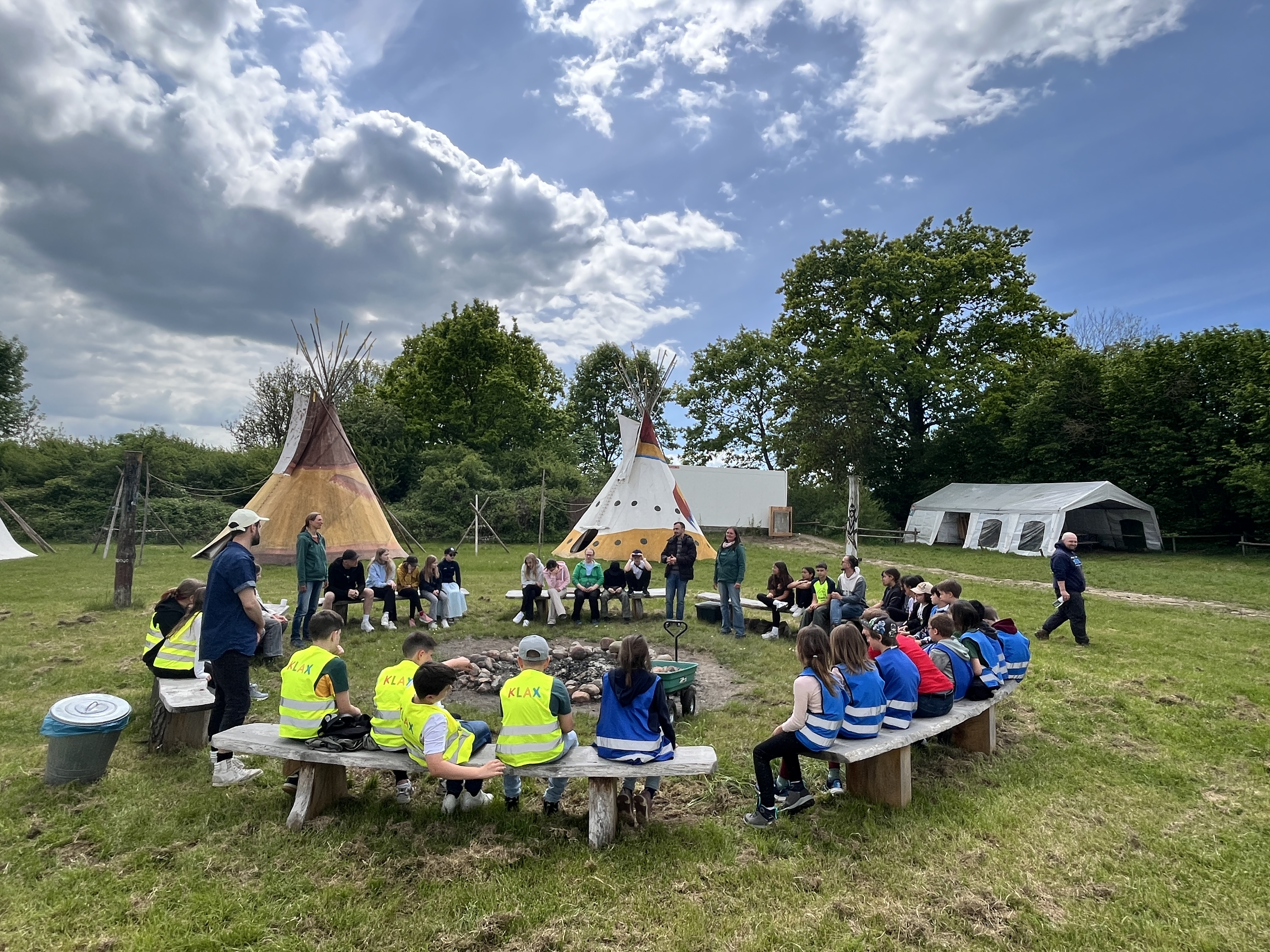
From 18 to 22 May 2026, a project week took place at the Klax Nature and Environment Camp as part of the Erasmus+ project. Participating were 36 pupils and eight learning facilitators from Klax International School as well as partner schools in Oulu (Finland) and Tenerife (Spain).
Twenty-five of the participating pupils are involved in the European network “Our Happy Future”, in which partner schools have been jointly working on the 17 Sustainable Development Goals of the United Nations since 2022. The group was complemented by 11 pupils from class 3b of Klax International School.
In addition to digital exchange via the eTwinning platform, personal encounters form a central part of the collaboration within the “Our Happy Future” network. During the project week, there was also an online exchange with a partner school in Latvia.
Each school year, members of the network agree on a thematic focus that they explore together over the course of the year. Under the current theme “Eco Explorer”, pupils investigate animals and plants in different habitats and explore the effects of human activity on the environment. Building on this, they develop ideas for the protection of living beings and their habitats.
Science in Practice
At the Klax Nature and Environmental Camp, located in the heart of the the Mecklenburg Lake District (German: Mecklenburgische Seenplatte) in Klocksin, the focus was on scientific and ecological exploration. The children explored native trees and plants, observed insects and various bird species, and studied the habitats of forest, field and aquatic animals.
A particular focus was placed on practical investigations, during which the children compared temperatures in the forest and in direct sunlight, analysed air and soil humidity, measured the pH value of lake water, recorded light intensity at different locations, and identified animal tracks such as those of deer and wild boar.
Creative Approaches to Nature
The participants also engaged creatively with nature. In various workshops, they produced linocuts, clay and plaster works, watercolours, and sun prints inspired by their observations of nature on site or experiences from their home countries. The resulting works will soon be exhibited at the Klax Children’s Art Gallery.
Community in Camp Life
Social learning was also an important component. Shared activities, games, and overnight stays in tipis strengthened the sense of community and intercultural exchange. Campfire evenings with bread on sticks and daily reflection circles provided space for dialogue and reflection.
A particular highlight was communal singing: each evening, participants learned a nature song in a different language – German, Finnish, Spanish, and English. This gave the children playful insight into the languages and cultures of the participating countries.
(Funded by the European Union. Views and opinions expressed are however those of the author(s) only and do not necessarily reflect those of the European Union or the National Agency. Neither the European Union nor the granting authority can be held responsible for them.)