–
Experiencing sustainability up close
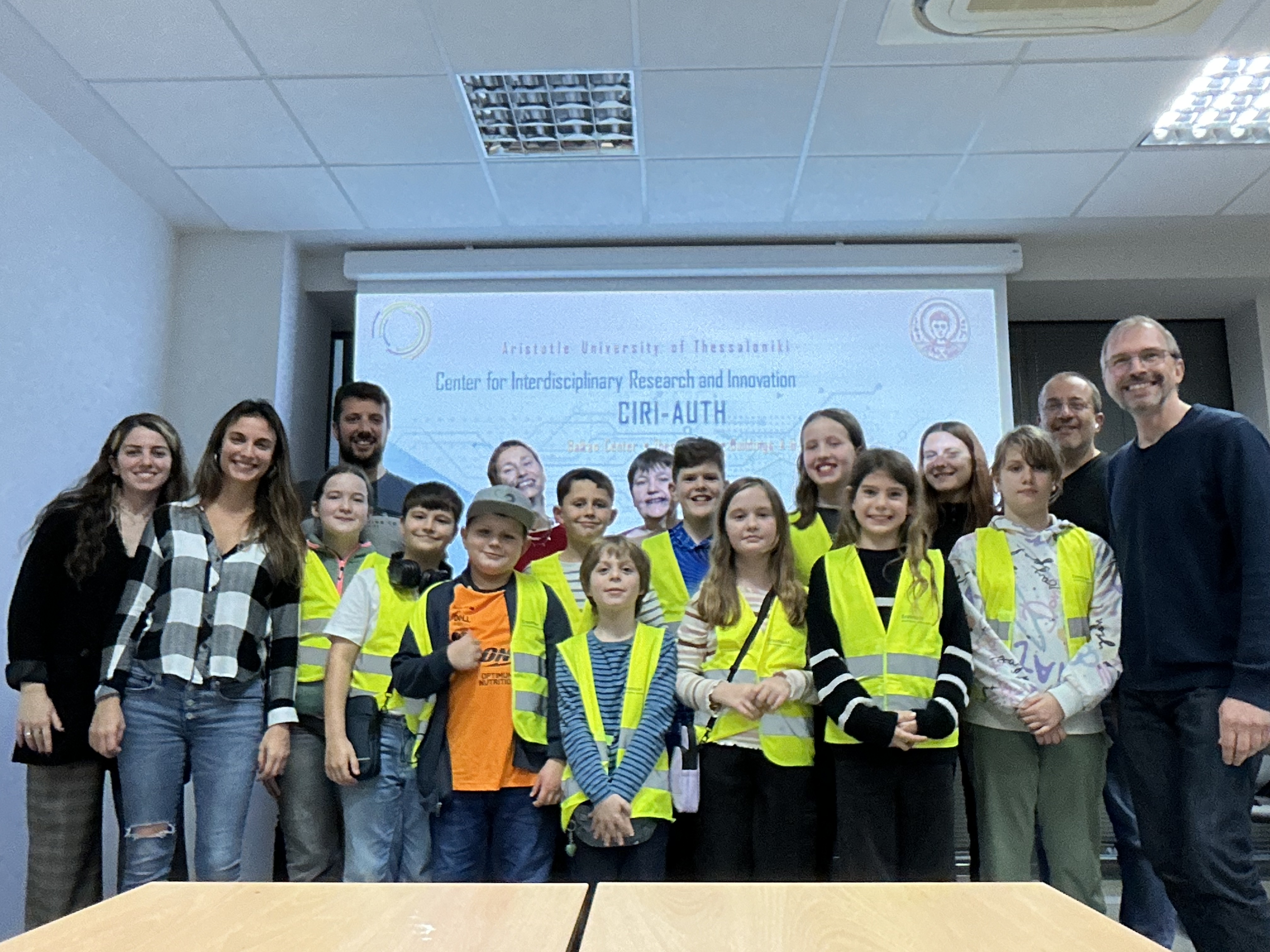
As part of the Klax School’s Erasmus+ project, the school club “Our Happy Future” travelled to Thessaloniki to explore hands-on environmental education together with the 8th Primary School of Evomos.
The club is part of the European network “Our Happy Future”, in which partner schools have been working on topics related to the 17 UN Sustainable Development Goals since 2022. Each school year, a joint project is developed – currently titled “Eco Explorer”. In this project, students explore animals and plants in different habitats, document their observations, and develop ideas for protecting natural environments. Through the eTwinning platform, participants stay continuously connected and prepare joint activities. The trip to Thessaloniki offered an opportunity to explore local biodiversity and exchange observations, project ideas, and ecological perspectives with Greek students. It also provided valuable moments of intercultural learning.
Gaining practical experience through excursions
A key focus of the project trip was waste reduction. Along the waterfront, beaches in Kalamaria, and Lake Kerkini, the students actively helped collect plastic bottles, nets, car tires, and paint residues while also taking water samples. The noticeable pH levels made it clear how strongly human activities affect bodies of water and ecosystems.
A particular highlight was the visit to the “Marine Ecosystems and Fisheries Lab” at Aristotle University of Thessaloniki. The biologists explained how the marine food pyramid works and how overfishing, pollution, and climate change disrupt the delicate balance of the oceans. Through experiments and interactive exercises, the students were able to understand complex ecological relationships firsthand.
Further excursions took the group to the Thessaloniki School of Agriculture and the Information Centre of the Axios Delta National Park – one of Greece’s most important wetlands. There, the students discovered the rich diversity of birds, plants, and reptiles, learned about the importance of conservation measures, and developed a deep awareness of sustainable action.
Learning, researching, taking action
The project trip gave students the opportunity to investigate ecological relationships themselves, strengthen their observation and analysis skills, try out digital tools, and work together on solutions. Most importantly, they returned with heightened environmental awareness and genuine motivation to engage in sustainable action.
(Funded by the European Union. Views and opinions expressed are however those of the author(s) only and do not necessarily reflect those of the European Union or the National Agency. Neither the European Union nor the granting authority can be held responsible for them.)